Learning Days 19:
EGAP Latin America Regional Hub Workshop & PhD Lab 2026
Organized by the host Instituto de Sociología at Pontificia Universidad Católica de Chile, and
the Evidence in Governance and Politics (EGAP) Latin America Regional Hub, headquartered in
Universidad de los Andes, Colombia.
July 27 – 31, 2026
Santiago de Chile
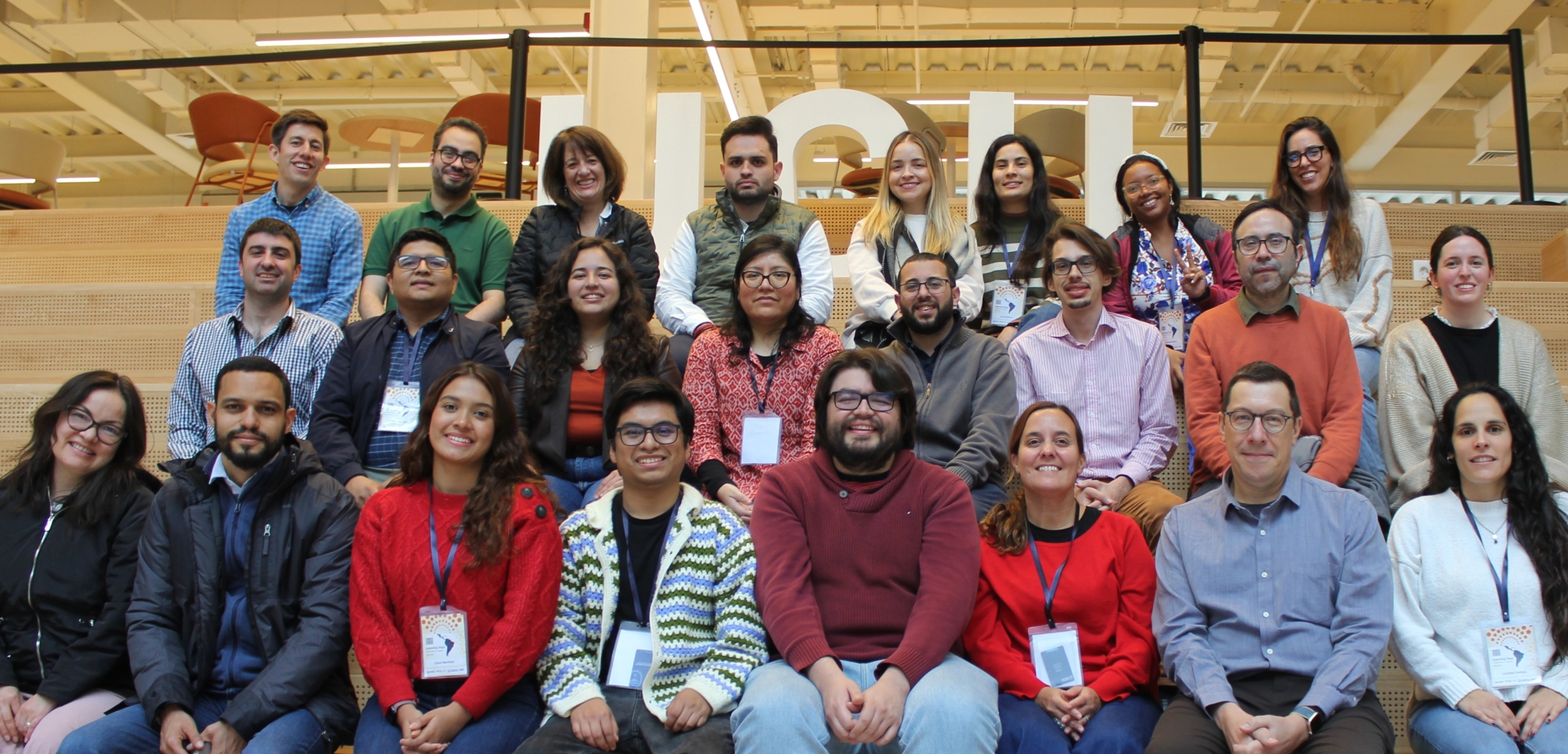
Learning Days Workshop 2026
The EGAP LATAM Regional Hub will hold a Learning Days workshop in Santiago, from July 27 to 31, 2026, in alliance with Instituto de Sociología, Pontificia Universidad Católica de Chile.
This 5-day intensive workshop aims to develop familiarity with causal inference in field randomized experiments with a quantitative focus. It is intended for Latin America-based scholars, researchers and practitioners working in academic, non-governmental, and government organizations who carry out analyses related to governance, policy, and development issues. More information about past Learning Days workshops and a typical schedule of the workshop can be found here.
EGAP will cover the financial costs (one person per selected project/application) of airfare, accommodation for up to 6 nights (for attendees from outside Santiago), snacks at the workshop, and a group dinner. If selected for the workshop, participants must arrive before the morning of Monday, July 27, 2026, and attend through the evening of Friday, July 31, 2026.
Eligibility Requirements
To be eligible, applicants must:
- Be currently based at a university, government, or civil society organization in Latin America.
- Have an evaluation research idea in mind or be in the first stages of a project examining the impact of a societal issue in Latin America.
- Have previous training in social sciences (e.g., political science, economics, public administration, or related disciplines). Scholars who primarily use qualitative methods, but have some familiarity with quantitative research, are encouraged to apply.
- Have basic knowledge of statistics (descriptive statistics). Prior familiarity with statistical software is a plus (ideally R), but not required.
- Be available to participate fully in all workshop activities throughout the entire week (full days).
The workshop will cover concepts and tools for field work, and it will include presentations of examples of randomized interventions, statistical exercises in R, and individual advisory sessions for participants to develop their own research designs. Key topics include causal inference, randomization, estimation, hypothesis testing, power analysis, among others. This training curriculum is based on accumulated knowledge from past workshops, as collected in the online coursebook: The Theory and Practice of Field Experiments: An Introduction from the EGAP Learning Days.
Accepted applicants are required to complete a preparatory, asynchronous online R course prior to the workshop. Further details will be shared with selected participants.
Applications are due by February 28, 2026.
How to apply?
To apply for the Learning Days Workshop, please complete this form. Note that applications will only be considered eligible if your CV is attached.
Note: To broaden participation and ensure more applicants can benefit from the program, applicants may apply to only one activity (either the Learning Days or the PhD Lab). Applications submitted to both will not be considered.
To give new applicants the opportunity to participate, this call is open only to first-time participants. Individuals who have participated previously are not eligible.
Application deadline: February 28, 2026.
For any inquiries, please contact: egap_latam@uniandes.edu.co.
—————————————————————————————————————————————————–
PhD Lab 3
August 01, 2026 Santiago de Chile
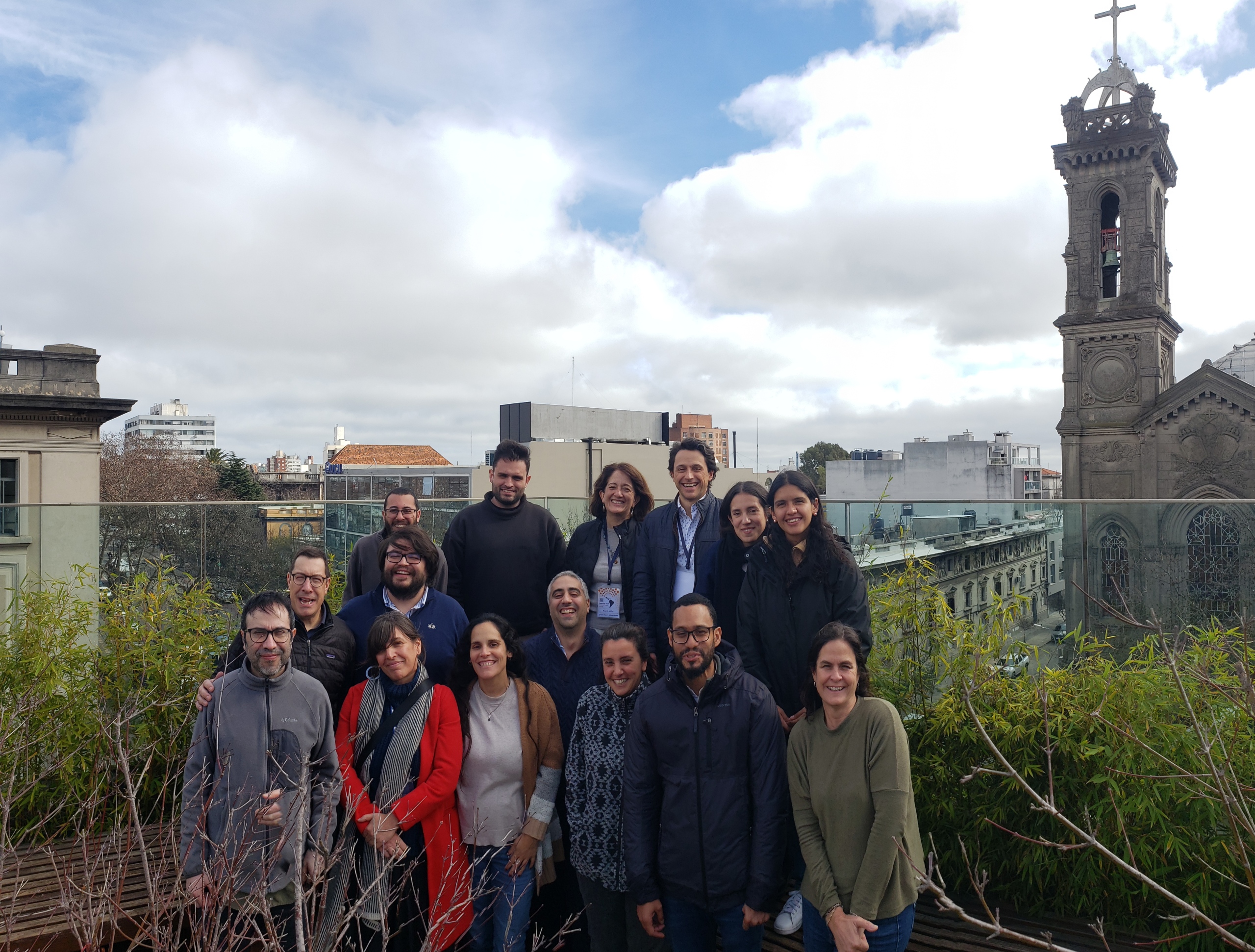
As part of our training program, we will host a one-day PhD Lab (Saturday, August 1, 2026) for doctoral students seeking high-quality, constructive feedback on a dissertation chapter or paper that is part of their doctoral thesis. The PhD Lab is designed as a focused working space where participants receive targeted feedback through EGAP feedback sessions with peers and distinguished scholars in the EGAP Global network.
The Lab will feature structured feedback sessions aimed at generating actionable, iterative input. To maximize the quality of feedback, selected participants will submit the same working paper / draft dissertation chapter used for their application, in an updated and complete version (or an extended outline, as applicable), approximately one month before the Lab. Materials will be pre-circulated, allowing discussants, peers, and mentors to prepare thoroughly. There will be no formal presentations during the Lab. This format is intended to help participants sharpen research questions, strengthen research design and identification strategies (where relevant), improve academic communication, and accelerate dissertation progress.
Priority will be given to projects that offer a rigorous analysis of key themes related to governance and politics in Latin America, and that include experimental methods (RCTs or closely related designs).
To further support dissertation research, a small-grant will be made available to projects with a promising experimental design aligned with the PhD Lab’s thematic focus. This small grant is intended to help cover direct research start-up or piloting costs (e.g., survey programming, piloting, recruitment, enumerator training, research assistance, fieldwork, or other essential pre-implementation expenses). Funding is not intended for salary replacement, tuition, general conference travel, or unrelated equipment. Interested applicants should indicate this in the application form and submit a brief statement (one pager) describing the project, implementation readiness, as well as a general timeline and budget. This funding will be awarded after completion of the in-person lab, based on an assessment of the experimental design’s quality and feasibility, its potential contribution and policy relevance, the team’s readiness to implement, and alignment with the lab’s thematic focus.
EGAP will cover the financial costs (for one person per selected project/application) of airfare, accommodation for one night (for attendees traveling from outside Santiago), and snacks during the Lab. If selected, participants must arrive in Santiago before the morning of Saturday, August 1, 2026, and be in attendance for the full Lab agenda.
Eligibility Requirements
To be eligible, applicants must meet the following requirements:
- Be an active PhD student in the social sciences or related disciplines at a university in Latin America.
- Have an advanced dissertation project, preferably at the analysis or writing stage.
- Submit a working paper / draft dissertation chapter (or an extended outline) that forms part of the doctoral thesis and includes the sections below.
The submitted working paper should include:
- Title: A clear and concise title that reflects the topic of the work.
- Abstract (max. 300 words): A summary of the objectives, methods, preliminary results (if any), and expected contributions/conclusions.
- Introduction: Contextualize the research, describe the problem, and justify its relevance.
- Literature Review: Summarize the state of the art, identify gaps, and explain how the project contributes to the literature.
- Theoretical Framework: Describe the conceptual/theoretical approach guiding the research.
- Methodology / Research Design: Detail the research design, including data collection and analysis plans. Projects should include a strong experimental component (RCTs or closely related designs) or clearly motivate an experimental approach aligned with the PhD Lab’s focus.
- Current Progress: Describe the current status of the dissertation chapter/paper (e.g., data collected, preliminary results, analysis plan, draft sections completed).
- Expected Impact: Briefly discuss the potential academic and/or policy implications of the work.
- Bibliography: List all references cited, following a standard format (e.g., APA, Chicago, or MLA).
Priority will be given to projects that address key themes related to governance and politics in Latin America, and that propose a credible experimental strategy to generate policy-relevant evidence.
Note: Small-grant (optional): Applicants who wish to be considered for a Small-Grant must add and submit a brief statement (up to one page) describing the project, implementation readiness and timeline, and a concise budget for a study with an experimental approach.
How to Apply?
To apply for the PhD Lab, please complete this form.
Note that applications will only be considered eligible if your working paper and CV are attached.
Note: To broaden participation and ensure more applicants can benefit from the program, applicants may apply to only one activity (either Learning Days or the PhD Lab). Applications submitted to both will not be considered.
To give new applicants the opportunity to participate, this call is open only to first-time participants. Individuals who have participated previously are not eligible.
Application deadline: February 28, 2026.
For any inquiries, please contact: egap_latam@uniandes.edu.co.
About EGAP
Evidence in Governance and Politics (EGAP) is a research, evaluation, and learning network with worldwide reach based at the University of Toronto (U of T) that promotes rigorous knowledge accumulation, innovation, and evidence-based policy in various governance domains, including accountability, political participation, mitigation of societal conflict, and reducing inequality. It does so by fostering academic-practitioner collaborations, developing tools and methods for analytical rigor, and training academics and practitioners alike, with an intensive focus in the Global South.
About the EGAP Latin American Regional Hub at Universidad de los Andes
The EGAP Latin America Regional Hub at Universidad de los Andes, in Colombia, was established to identify local priorities, set the research agenda, share knowledge and foster collaboration across regions. Thus, EGAP continues to develop partnerships with universities to co-host regionally focused events, including EGAP meetings, policy forums, and Learning Days workshops.