Elections Series: Colombian Presidential Election
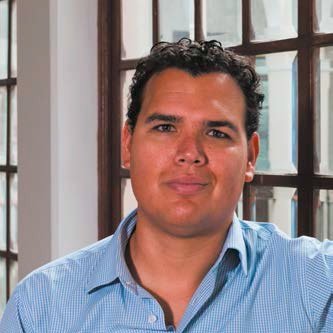
Author: Juan Vargas
On May 31, Colombians will vote in a presidential election that feels, to many, like a crossroads. Iván Cepeda, the Petro-aligned candidate, promises to continue negotiations with armed groups. Paloma Valencia, from Álvaro Uribe’s Centro Democrático, proposes security-first governance. Abelardo de la Espriella, a celebrity lawyer turned political outsider, channels a Bukele-style promise to crush armed groups with military force within 90 days. The choice matters. But the forces shaping it are not new, and Colombia has been here before.
The country is a Latin American outlier. For two hundred years it has sustained one of the region’s oldest democracies while simultaneously experiencing some of its worst political violence. Regular elections, competitive parties, and peaceful alternation of power coexist with civil war and political violence that persist to this day. This is not paradoxical. The two phenomena are connected through an institutional weakness that recurs across centuries: Colombia keeps mistaking access to power or coercive control for institutional credibility. Elections without enforceable rules produce new targets. Military campaigns without territorial governance produce new vacuums. Peace agreements without verification produce new opportunities for predation. None of the three candidates seems willing to confront this pattern.
The trap
Colombia introduced universal male suffrage in 1853 (one of the earliest franchise extensions in the world), and violence declined temporarily. Within a decade, local elites reversed the reform. Several more civil wars followed. What eventually brought peace was not the ballot but a credible mechanism for sharing power: the “incomplete vote” system of 1905, which guaranteed the minority party a third of congressional seats. Colombia then enjoyed nearly five decades without civil war. But once the changing balance of political forces made the terms of the arrangement unsustainable, partisan violence erupted again. The lesson is consistent: democratic reforms reduce violence when backed by institutional arrangements that credibly constrain the use of force. When those arrangements are absent, reforms can make things worse.
This is exactly what happened in the late twentieth century. In the 1980s, Colombia opened its political system: for the first time, mayors and governors were elected by popular vote, allowing left-wing parties, ethnic minorities, and peasant movements to contest local power. The goal was to channel political conflict into elections. The result, in many municipalities, was the opposite. Where left-wing challengers won, paramilitary violence surged as a calculated strategy by traditional elites who colluded with armed groups to prevent newcomers from consolidating power. The most devastating case was the systematic extermination of the Patriotic Union, the left-wing party that emerged from the FARC-government peace opening, whose members were assassinated by the hundreds after winning office for the first time in the late1980s. Political opening was not the mistake. Implementing it without the institutional protections to make it survivable was.
The contemporary recurrence
The institutional weakness that allowed elites to weaponize the 1986 democratic opening did not go away. It changed form. Today, the actors exploiting weak institutions are not only political elites but also armed groups themselves: criminal organizations that have learned to turn the state’s own peace initiatives into instruments of territorial consolidation.
The centerpiece of Petro’s presidency was “Paz Total” (total peace), simultaneous negotiations with several armed groups, from FARC dissident factions to criminal organizations like the Clan del Golfo. The premise was that a comprehensive approach could succeed where piecemeal efforts had failed. The evidence I’ve found in recent research shows it has so far reproduced this pattern: a well-intentioned reform, implemented without credible enforcement capacity, that armed actors exploited to advance their own interests.
The simultaneous ceasefires of the first half of 2023 led to opposing dynamics: highly visible forms of violence (homicides, massacres, armed confrontations) were unaffected. But less visible violence surged: extortion, forced recruitment of minors, threats against civilians, and illegal checkpoints all increased substantially. Criminal governance, the apparatus through which armed groups regulate daily life in the territories they control, expanded. The ceasefires raised the political cost of visible violence for armed groups (killings could jeopardize negotiations) but simultaneously weakened the state’s enforcement capacity, since security forces were explicitly constrained from intervening in ceasefire zones. Armed groups shifted from the kinds of violence that attract headlines to the kinds that consolidate territorial control without scrutiny. Without clear protocols, credible verification mechanisms, or a legal framework for negotiating with criminal organizations, the “Paz Total’ policy gave armed groups room to expand their coercive grip on millions of civilians.
Just as the 1986 political opening failed not because inclusion was wrong but because the state could not protect the newly included, “Paz Total” has so far reproduced this pattern not because negotiation is the wrong strategy (who would oppose the dream of total peace?) but because the state could not enforce the terms of its own agreements. In both cases, the actors with the most to gain from institutional weakness (paramilitaries then, criminal organizations now) filled the vacuum. The June 2025 shooting of Senator Miguel Uribe Turbay, who died two months later, was the first assassination of a presidential candidate in Colombia in three decades. It is a reminder that the intersection of elections and violence remains lethal, and that the institutional deficit underlying it remains unresolved.
What the presidential candidates get wrong
Each candidate’s platform is a different bet about how to break the cycle. None addresses the institutional core.
Cepeda bets on negotiation. When ceasefires are well-designed and politically sustained, the dividends are real: the 2014 FARC ceasefire saved hundreds of lives per year in affected municipalities and triggered genuine economic recovery. But those gains evaporated when the political environment shifted under the Duque administration: violence returned, businesses closed, former combatants were assassinated. What is missing from Cepeda’s platform is precisely what made “Paz Total” fail: enforceable verification protocols, territorial protection for communities in ceasefire zones, and credible sanctions for armed groups that violate the terms. Without these, continuing negotiations means accepting the strategic substitution the country has already witnessed — less visible violence, more predation, stronger armed groups. A ceasefire without monitoring is not a peace instrument. It is a subsidy to criminal governance.
Valencia bets on institutional order, and there is something to this. Colombia’s own history suggests that peace has only been durable when backed by credible guarantees that the rules apply regardless of who holds power. But what is missing from Valencia’s platform is the other half of the institutional equation: rural state-building, viable economic alternatives to coca and illegal mining, and civilian accountability mechanisms for the security forces. Again and again, military campaigns against armed groups in Colombia have been followed by reorganization rather than dissolution. The paramilitaries demobilized in the mid-2000s; within years, successor organizations occupied the same territories and the same illicit economies. Security without territorial state presence buys time. It does not buy peace.
De la Espriella bets on overwhelming force. The appeal is understandable in a country where armed groups have exploited every negotiation to regroup. But force without institutional change does not eliminate armed groups; it rearranges them. The FARC’s demobilization in 2016 was followed by the rapid growth of dissident factions that now control much of the territory the original FARC vacated. What is missing is everything that must follow a military operation for it to produce lasting results: post-operation governance, transitional justice, and territorial service delivery. A ninety-day campaign cannot fix what two centuries of institutional weakness have produced. It can, however, generate violent escalation, including against civilians, that creates new grievances and new recruits for the next generation of armed groups.
What would actually matter
Colombia’s problem is not negotiation versus security. It is the absence of credible institutions that make either negotiation or security durable. The deeper question this election poses is whether any of the candidates can address the institutional deficits that have made both peace and security elusive for two centuries.
Three things are needed. Power-sharing mechanisms that allocate power through procedures rather than through deals among specific parties. Enforcement capacity that reaches the peripheral regions where violence is concentrated, not only through military presence but through functioning courts, civilian administration, and basic public services. And sustained political commitment to peace processes across administrations, because the communities that benefit from ceasefires are the first to suffer when the next government abandons them.
None of these conditions is fully met in Colombia today. The peace process with FARC remains poorly implemented nearly a decade after being signed. Armed groups control significant territory and have grown stronger during “Paz Total”. A presidential candidate was assassinated less than a year ago.
Colombia’s tragedy is not that it lacks democratic ambition; it has been at the forefront of democratic reform in Latin America since the nineteenth century. The tragedy is that its reforms have repeatedly been undermined by the institutional weaknesses they were meant to address. Whoever wins on May 31 will face the same trap. Escaping it requires more than the right policy. It requires building the credible guarantees that Colombia has lacked for its entire history as a republic — a project far more difficult, and far more important, than any single election can resolve.